Loading...
- Home
- Capabilities
- ACTIO® Hub
- About Us
- Connect with Us
- AP Library
January 14, 2026
by Setyawati Fitrianggraeni and Tiara Amanda Putri
Overview
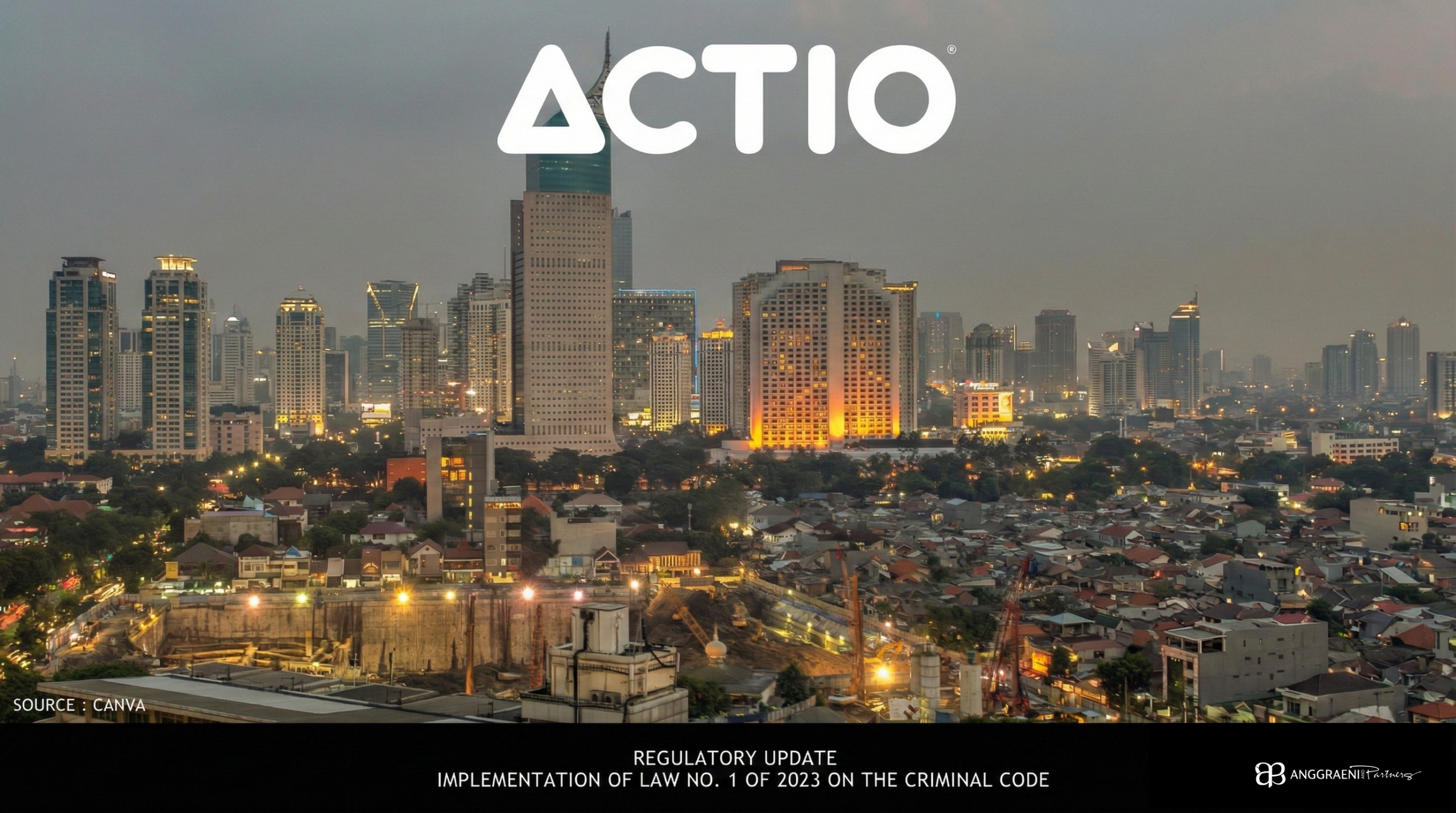
The Government of the Republic of Indonesia officially implemented the new Criminal Code, also known as Kitab Undang-Undang Hukum Pidana (KUHP), pursuant to Law No. 1 of 2023, effective 2 January 2026. It replaces the colonial-era Wetboek van Strafrecht voor Nederlandsch Indie (1918) with a modern criminal justice framework grounded in national values (Pancasila).(1)
The reform was motivated by the need to modernize Indonesia’s criminal law, address outdated provisions, and create a more humane and just system. The new code shifts penal philosophy from a retributive to a restorative approach, emphasizing victim recovery, social balance, and offender rehabilitation.(2)
Key Highlights
The implementation of Law No. 1 of 2023 signifies the shift from a colonial criminal code to a nationally developed legal framework. This shift is reflected in updates to the goals of punishment under Article 51 and the overhaul of the sanction system through the introduction of alternative sanctions beyond imprisonment, as outlined in Article 65, along with Articles 71 and the following provisions of Law No. 1 of 2023. These changes demonstrate the move toward a penal system rooted in national values and modern criminal justice principles. (1)
From the perspective of justice and humanity, this aligns with rehabilitating inmates and resonates with broader philosophical and theological principles. Article 51 emphasizes the rehabilitation of offenders, highlighting a legal approach that prioritizes societal restoration alongside the treatment of offenders. (3)
The new KUHP introduces a fundamental shift in penal philosophy from a retributive approach toward a restorative justice model. Under this framework, the objectives of punishment extend beyond penalizing offenders to include the recovery of victims, the restoration of social balance, and the rehabilitation of perpetrators, as regulated in Article 51 of Law No. 1 of 2023. This shift is reflected in the expansion of alternative sanctions, such as community service and supervision, as regulated under Article 65 in conjunction with Articles 71 and subsequent provisions of Law No. 1 of 2023, aimed at ensuring proportionality and reducing reliance on imprisonment.(1)
The adoption and implementation of the new Criminal Code aim to overcome the numerous difficulties created by the application of the old Criminal Code, which was considered outdated, not fully reflective of Indonesian culture, and misaligned with the rapidly evolving legal environment.(4) In this context, for criminal offenses committed before the effective date but processed thereafter, the application of the lex favor reo principle is expressly provided under Article 618 in conjunction with Article 3 of Law No. 1 of 2023. In the event of legislative changes, the provision most advantageous to the defendant must be applied.(5)
One of the key highlights of Law No. 1 of 2023 is the explicit recognition of corporations as subjects of criminal liability. Under the previous Criminal Code, which was influenced by the principle of societas delinquere non potest, criminal responsibility was primarily attributed to individuals (natuurlijke persoon), and corporations were not expressly regulated as criminal law subjects. (6)
Law No. 1 of 2023 now clearly provides that corporations may be held criminally liable, as regulated under Articles 45 to 50, with the applicable types of criminal sanctions set out in Article 56, as well as Articles 118 to 123. This framework strengthens legal certainty and marks a significant shift from an individual-centered model of criminal liability toward a regime that formally recognizes corporate accountability
Concluding Remark
The implementation of Law No. 1 of 2023 signifies a systemic modernization of Indonesia’s criminal justice system. By embedding restorative justice principles and ensuring the application of more lenient provisions during transitional cases, and formally recognizing corporate criminal liability, the new KUHP aims to foster a more humane and equitable criminal law regime aligned with national values and contemporary human rights standards.
References
Regulation
Law No. 1 of 2023 on the Criminal Code
Literature
For further information, please contact:

WWW.AP-LAWSOLUTION.COM
P: 6221. 7278 7678, 72795001
H: +62 811 8800 427
S.F. Anggraeni
Managing Partner
connect@ap-lawsolution.net
Tiara Amanda Putri
Growth